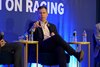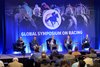


Speaking Dec. 9 at the Global Symposium on Racing in Tucson, Ariz., a Florida Thoroughbred Breeders' and Owners' Association executive revealed that a long-held nonprofit license in Ocala could be used to develop a new racetrack to support Florida's beleaguered Thoroughbred industry.
The remarks from FTBOA CEO Lonny Powell on the "Reinventing Racing's Business Model" panel come as Florida's Thoroughbred industry faces pressure from a 1/ST Racing-backed push to decouple casinos from racetracks. 1/ST Racing operates Gulfstream Park in Hallandale Beach, the state's most successful racing venue. Tampa Bay Downs, under different ownership, could also be vulnerable to ceasing racing after an amendment was added to the proposed bill last year.
Decoupling refers to removing the statutory requirement that a track conduct live racing to retain its gaming license. Florida's earlier decoupling of greyhound, Quarter Horse, and Standardbred racing from gaming contributed to the collapse of those sports in the state. Gaming is more profitable for operators than racing.
The initiative to decouple Thoroughbred racing was defeated in the Florida legislature last year, but the fight is expected to be renewed when legislators reconvene next month.
Regardless of last year's defeat in the legislature, "Everybody needs to give up on the idea that they're going to force (1/ST Racing) to stay in the business of live racing," Powell said of Gulfstream, which sits on valuable real estate just outside of Fort Lauderdale.
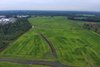
Powell said the Ocala region—home to one of the centers of the Thoroughbred breeding, sales, and training—offers a logical alternative. He explained that more than a decade ago, the FTBOA secured and converted a Quarter Horse license into a nonprofit Thoroughbred racing permit, keeping it "on ice" in case Florida tracks drastically reduced live racing.
In response to Powell's comments, which he called his first public statements on the Ocala option, moderator Mark Simendinger quipped about Powell's efforts at revival, "If I'm given five minutes to live, I hope you're my doctor."
The plan is in its early stages, but just last week, the FTBOA signed a multi-year, exclusive permit agreement with a Delaware-registered entity formed by former Miami Beach mayor Philip Levine and attorney John Morgan of the massive law firm Morgan & Morgan. Levine, who attended the Symposium panel and spoke from the audience area toward the end of the panels, believes the track would be well-positioned for success due in part to Ocala's equine ecosystem.
Other speakers on the panel entitled "Reinventing Racing's Business Model: Lessons from State Battles and Policy Shifts," included Jon Moss, executive director of the Iowa Horsemen's Benevolent and Protective Association; David Richardson, executive director of the Maryland Thoroughbred Horsemen's Association; and former Kentucky Sen. Damon Thayer, owner/president of Thayer Communications and Consulting.
While Moss and Richardson provided updates from Iowa and Maryland, Florida dominated the conversation.
Thayer, like Powell, is involved in the fight to oppose decoupling and, in earlier comments before discussion of the Ocala track license, pledged to be aligned again this year with Powell "to beat that bill and save Florida racing."
Later, reflecting on the proposed Ocala track, he called it viable but emphasized that "to make anything happen in Florida, it has to be multilateral," with broad stakeholder support. He also mentioned cost as a key consideration.
Thayer noted the Thoroughbred Racing Initiative and the Florida Horsemen's Benevolent and Protective Association would release a year-long feasibility study before Christmas outlining further options.