


As Thoroughbred racing heads into a new year, it faces the inevitable challenge of learning from the past 12 months and applying those lessons to a new year.
With 2026 at hand, BloodHorse has reprised its online year-end survey to ask some of the sport's leading individuals for their opinions on pertinent issues facing the sport.
Through Jan. 2 in the BloodHorse Daily and on www.bloodhorse.com, a select group of panelists will address issues such as the most exciting freshman sire for 2026, field size, what participants tell newcomers they like most about the sport, fixed-odds wagering, the Breeders' Cup, and the Triple Crown. We continue the series today with a question about foal crop size.
While realizing there are countless other voices, the hope is that these answers will spark meaningful discussion within the industry.
Anyone who would like to offer their opinion is encouraged to submit it in writing to editorial@bloodhorse.com for inclusion in our Letters to the Editor. Longer pieces can be considered for an Industry Voices column.
To access our 2023 year-end survey, please click the following link for a pdf version.
Question: What are one or two ideas that should be tried to increase the size of the foal crop?
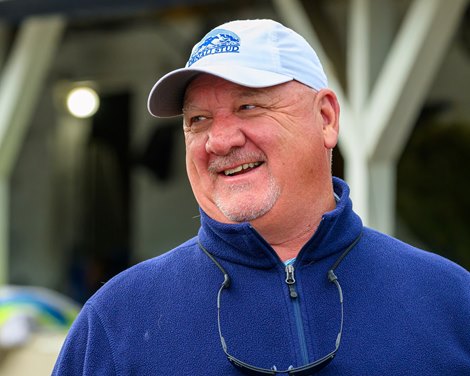
Ken McPeek, trainer: When I started training, there were 54,000 foals a year. We're down to 16,000. They are taking an issue and overcomplicating the answer. It's a MEDIA RIGHTS ISSUE.
(The Horseracing Integrity and Safety Authority) and certain powers are barking up the wrong tree. Thoroughbred racing isn't shrinking or losing its fan base because of medications, or breakdowns, or a jockey hitting his horse seven times. All these things are ridiculous. The reason horse racing is losing fans is because they're making it too difficult for a fan to watch a race. To access and view a horse race is equivalent to a root canal sometimes.
Until the sport deals with the media rights issue and makes it easy to watch horse racing, it will never grow. You should not have to subscribe to a service to watch a horse race. You should not have to open an advance-deposit wagering account to watch a horse race. You should not have to be in the correct state or be a certain age to watch a horse race.
Make it easy to watch and the sport and the foal crop will grow again.
When baseball opened the sport and put it on the radio in the 1930s, there was fear people wouldn't come to the games. Contrary to the fear, it grew the sport when they opened the media rights.
It's a different era, but today it should be easy to watch a horse race for free. Fans are not going to watch unless you give them an access source, which is why I invented Horse Races Now. The app has been downloaded more than 1 million times in 223 countries with 300,000 active users. But we're not allowed to access video. Are they scared to have people show it? Honestly, I don't get it. This is a simple solution.
One day at Keeneland, three boys, who couldn't have been older than 10, each came up to me and asked if I was Mr. McPeek and if I put the Horse Races Now app together. I told them I did, and simultaneous they told me they love the app because they were able to watch the races. You've got to engage these kids when they are young. Not to gamble, but to enjoy the sport. If they decide to gamble when they are old enough, that's their decision. But we have walled off our own sport from the masses.
Tom Ryan, managing partner, SF Bloodstock and racing manager, SF Racing: There's no hidden trick or magic formula to improving the quality or size of our foal crop. The only real way to move the needle is to grow demand for horse racing nationwide. Where we are numbers-wise today in North America feels about right, given the number of racetracks that have closed. The reality is, we're all competing for the same gambling dollars. Most thriving tracks today are doing so thanks to supplemental income from alternative gaming. If we want to grow our foal crop, then we've got to make horse racing more marketable—tell our story better, do a better job on the media side, and find a way to bring the sport back into the mainstream conversation.
Right now, horse racing is in the middle of a reset. I hope that key markets like California can find sustainable ways to remain viable, because we've already lost too many established jurisdictions. Without growth in some of those smaller or mid-tier markets outside Kentucky, it's challenging to generate new demand for foals. Kentucky is producing an outstanding product and sets an excellent standard. But for the industry as a whole to thrive, we need strong programs everywhere.

Florida and California absolutely need to be maintained. The Mid-Atlantic, Arkansas, and New York are all well-positioned to continue contributing. Still, if we want to grow meaningfully, the demand has to be created—and that can only happen through a national effort. We need a coordinated program that encourages every state government to support horse racing, agriculture, and the economic benefits that come with them.
We've become a niche sport, but that doesn't mean we have to stay one. If we want to get back to producing bigger numbers and capturing more fans, it has to happen on a national level. Horse racing still has a fantastic tradition and emotional appeal—we just have to find new ways to bring it back to life in places where it's fallen quiet.
The growth of syndicates and partnerships have helped open the door for more people to get involved, lowering the buy-in and making ownership more accessible. When these partnerships are managed transparently, they create real excitement and repeat engagement.
That's powerful. Horse racing remains one of the most enjoyable outdoor sports out there. It's social, full of energy, and offers something for everyone. Whether you're dressed up for a big day or just watching a few races with friends, the track is an experience. That's what we need to showcase—the excitement, the access, and the community that make racing so special. Then the demand for foals will grow.
Najja Thompson, executive director of the New York Thoroughbred Breeders: Reversing the national foal crop decline will require coordinated, collaborative action among all industry stakeholders, with a clear focus on the continued development and strengthening of state-bred programs.

From my perspective, two ideas warrant serious consideration:
- Leverage the current favorable tax depreciation policy to drive broodmare investment and retention
- Establish a nationally coordinated breed-to-race incentive framework
The current 100% bonus depreciation schedule is a direct result of collaborative lobbying efforts by the National Thoroughbred Racing Association, The Jockey Club, the Thoroughbred Owners and Breeders Association, and other industry stakeholders.
It has provided a powerful but time-sensitive opportunity to grow the foal crop. It is critical that industry organizations, sales companies, and racetrack operators jointly and proactively promote the use of 100% bonus depreciation to encourage new broodmare purchases, retain existing mare bands, and attract new participants to breeding.
Pairing these federal tax benefits with state-level mare retention incentives, such as bonuses for mares bred in consecutive years or incentives for first-time breeders, will help ensure that these policies are directed toward actual foal crop production, rather than short-term transactional activity.
The establishment of a nationally coordinated breed-to-race incentive framework that aligns mare incentives with racing opportunities and utilizes state breeding programs as the delivery mechanism would also help to incentivize breeding decisions by expanding access to regional racing circuits and creating clearer pathways from breeding to racing.
New York and the Mid-Atlantic region are well-positioned to serve as a model for this approach, given our strong incentive structures and interconnected racing schedules.
At the same time, states such as Florida, with the recent announcement of a potential racetrack development in Ocala, and California, as a critical population and media market for the sport, would also benefit from incentivized pathways from breeding to racing, with the results benefiting a shared objective of growing the national foal crop and encouraging new owners.
The ideas above provide a pragmatic blueprint to help reverse the foal crop decline. However, I'm open to hearing feedback and ideas from all stakeholders and industry participants. What is critical is that we move from open discussion to coordinated execution with collective commitment to grow the foal crop and continue to sustain our sport nationally for the future.
Elliott Walden, president, CEO, and racing manager of WinStar Farm: The shrinking foal crop size presents a critical challenge to the long-term vitality of our sport. Despite recent increases in sales prices, the number of foals born annually continues to decline. While the rate of reduction has slowed slightly—averaging 2% over the last three years compared to a 3.53% average previously—the trend remains a significant concern.

Two strategic initiatives could effectively reverse this trend. First, we must expand incentive programs like the recent "Breeders' Day" held at Churchill Downs for Kentucky-breds, which distributed $350,000 to participating breeders. This concept should be scaled up for 2026, potentially through collaboration with the Kentucky Thoroughbred Association and the Horsemen's Benevolent and Protective Association to include all Kentucky racetracks. Expanding these high-payout days will inject essential funds directly back into breeders' operations and foster community enthusiasm. These days can be opportunities for sponsors to participate, educational opportunities for breeding a better horse, and just a fun day at the races.
Furthermore, we must address the decline of breeding programs in other states. The industry has been aptly described as "Kentucky, an island in a receding lake of breeders." While programs in states like New York and Louisiana have seen growth, top-tier programs in California and Florida have unfortunately contracted. To bolster the national foal crop, a regional approach is vital. We need a formal dialogue between states to explore a new model: grouping states into competitive regions and establishing lucrative, regionally exclusive stakes races. A capstone event, perhaps a regional challenge race featured on the Breeders' Cup undercard, could generate significant interest and elevate the profile of these vital state programs.
While the challenge of the foal crop size is significant, I am hopeful we have reached the bottom of this cycle. Implementing these incentives is crucial because without a robust community of breeders, the future of our entire sport is at risk.