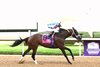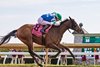

When Light Won Up won the $103,000 Sweet Life Stakes at Santa Anita Park in February, the $200,000 2024 Keeneland September Yearling Sale graduate joined an impressive roster of stakes winners bred (and sold) by Bill Betz and partners, which includes champion 2-Year-Old Filly Echo Zulu, 2009 Kentucky Derby (G1) winner Mine That Bird, and other grade 1 winners.
When Betz first arrived in the Bluegrass, such success was not even a glimmer in the Notre Dame graduate's eye. The former Pennsylvania resident was impressed with what he saw.
"It is the middle of the seventies, and I am driving my '64 Dodge past the farms on Paris Pike, I am seeing stone walls and large, well-kept pastures filled with mares and foals, and I began to wonder, 'What do I have to do to be part of this?'" Betz recalled.
Betz had worked with horses before coming to Kentucky. By the time he was 15, thanks to a horse-trading great uncle's initial encouragement, Betz was traveling the country getting $25 a head to show Quarter Horses in the ring. Thoroughbreds were beginning to be bred to Quarter Horses, so Betz's initial intention in coming to Kentucky was to absorb what he could and then bring that equine knowledge home with him. But Betz grew so fascinated by Thoroughbreds that he never left.

But the mid-seventies horse business was very different in many ways from today. What A Pleasure led the general sire's list, which had been dominated by Bold Ruler. A full book for a stallion was 50-60 mares; 100 would have been heresy, at least according to resident Claiborne (and former United States Cavalry Remount) veterinarian Col. Floyd Sager. Palpating a mare prior to breeding cost $8, and you wouldn't check for pregnancy until a month had passed. There were few women in the business, and some accompanying a mare to the breeding shed were politely told, "This is no place for a nice gal like you."
There was no KEEP, and the Kentucky Horse Park had not yet been developed.
"There wasn't a 'Farm Managers School' you could go to," Betz explained. He enrolled in the University of Kentucky on the pretext of earning his Masters, "but my family could see my heart was elsewhere, and I can't blame them. Take classes on pasture management and equine nutrition instead of going to law school? A ridiculous thing to pursue."
Betz knew he would have to develop his own curriculum.
"This business has many facets, and you quickly find that the more you know, the more you need to know," he said. "At the most basic, it is knowing a horse is BY a stallion and OUT of a mare. Besides the sweat equity earned as you are acquainting yourself with the aspects of husbandry, breeding mares, attending foalings and the like, you have to also master the business aspects, without which no breeder stays solvent very long".
Betz went to work for Lee Eaton, where he honed his skills.
"He gave me an office, and I researched the pedigrees of any fillies entered in a claiming race. I also indexed the families of the horses Lee sold, recording it all on cards by hand," Betz said. "It isn't an easy task, but all that labor starts the connections forming in your mind. There aren't any shortcuts to putting pedigrees into memory."
Betz left Kentucky when an opportunity to manage Helmore Farm in Maryland arose. Edgar Lucas stood three stallions and bred a few hundred mares a year.
"There was a little bit of everything to do every day, which initially can be nerve wracking," Betz said. "The first time you foal a mare, you realize screwing up can have catastrophic results. It can be a baptism by fire, and the more you do, the more you can do successfully".

Betz ultimately returned to Kentucky, leasing a farm Lucas had near Paris. He heard that Dr. Bill McGee, one of the first people who befriended him when he arrived in Kentucky, was interested in selling his farm.
"I knew Dr. Bill McGee, knew the farm, and knew that it was the place for me," Betz said. "It was good land, a good size at 300 acres and historic to boot."
Betz explains that he would be only the third owner of Winton Farm, originally a Revolutionary War land grant, initially deeded to the heirs of Patrick Henry. But he needed partners in order to buy Winton Farm. Partners gave Betz the wherewithal to own the farm. He came to realize that he didn't want to board horses, but the economics favored populating the farm with mares bought in partnership.
"When you claim a mare off the track or buy a maiden mare at the sales," Betz notes, "you have to figure you are a long way from deriving any income from your purchase. If you are fortunate, the mare will adjust to farm life in time to breed come February. There are inherent expenses of breeding, including reproductive work, etc., and if she does conceive, eventually the stud fee. Eleven months and two weeks after her last breeding, you see what kind of foal she produces.
"I don't usually sell weanlings, even though selling a yearling adds another year until you see their market value. It takes three years of feed and bedding, etc., before you will see any return, if there is one. Partnership spreads out the expenses and rewards, but your investment (and risk) is spread out across more than one individual. But you have to have the right partners."
| Horse | Major Accomplishments | Yearling Sale Price | Partners |
| Dubai Escapade | 2006 Ballerina Breeders' Cup Stakes (G1) | $75,000 | Needham/Betz & James Blackburn |
| Echo Zulu | 2021 Eclipse Champion 2-Year-Old Filly, Breeders' Cup Juvenile Fillies (G1) | $300,000 | Betz/J. Betz/Burns/CHNNHK/Magers/Coco Equine/Ramsby |
| El Corredor | 2000 Cigar Mile Handicap (G1) | $110,000 | Needham-Betz Thoroughbreds/Liberation |
| Executiveprivilege | 2012 Del Mar Debutante (G1), Chandelier Stakes (G1) | $23,000 | Betz/D.J. Stable/Kidder/J. Betz/Robenalt |
| Hoppertunity | 2014 Clark Handicap, 2016 Jockey Club Gold Cup (G1) | $300,000 | Betz/D.J. Stable/Kidder/J. Betz/Robenalt |
| Madcap Escapade | 2004 Ashland Stakes (G1) | $160,000 | Needham/Betz Thoroughbreds & James Blackburn |
| Mine That Bird | 2009 Kentucky Derby (G1), 2008 Sovereign Award Champion 2-Year-Old | $9,500 | Lamantia, Blackburn & Needham/Betz Thoroughbreds |
| Roman Ruler | 2005 Haskell Invitational (G1) | $500,000 | Needham/Betz, Liberation Fm & Ashford Stud |
Until his retirement, and the dissolution of their agreement a few years ago, Phil Needham was this partner. The partners, together and with a variety of clients, bred 50 stakes performers that include 13 graded/group stakes winners among 33 black-type winners.
"We arrived at about the same time and got to know each other and became friends. As we talked shop, we realized that we shared the same objectives," recalled Betz. "We both saw that if you paid attention to detail, spread the financial risk so no one crooked or dead foal would sink the ship, that we should be successful. If we kept improving our broodmare band and bred to the right stallions, we should be able to enjoy the fruits of our labors."

For all that the partners had in common, neither attended the one race that every breeder dreams of. When asked if he saw Mine That Bird's 2009 Kentucky Derby win, Betz smiles sheepishly and says "No. Neither of us did. Phil was in Ohio competing in a bicycle race, and I stayed on the farm. Of course, you dream of breeding a Derby winner, but I just didn't see this $9,500 yearling, by an as yet unproven $10,000 stallion, had a chance."
Remembering his late partner, who passed in 2025, Betz recalls that "Phil had a wonderful smile and a way that made people instantly comfortable. We started with a small stake, and we nurtured it into something neither of us could have ever dreamed would happen. This business is a roller coaster, and some days, circumstances can really put you in a mood. The most telling thing is being able to get up from when the bad things happen and keep showing up every day. We both did that."