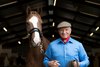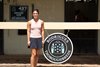


Long before Bella Rodrigues became a consignor of Thoroughbreds, she was already well versed in buying and selling horses, just not racehorses.
Her first foray at public auction under her name came at the Ocala Breeders' Sales Spring Sale of 2-Year-Olds in Training, and it was a resounding success. She sold five horses she put through the ring, including two for six figures: a Girvin colt for $230,000 (bought for $35,000 as a yearling) and a Drain the Clock filly for $200,000 (bought for $75,000 as a yearling). She acquired the five horses as yearlings with her business partner, John Paul Regard, acting as agent, and other clients, including Julie Rini.
Born in New Jersey, the 22-year-old Rodrigues grew up near St. Augustine, Fla., in a small beach town. Her entrepreneurial spirit revealed itself when she was a teenager, first out of necessity: to sell the pony she was riding competitively and outgrew in order to afford another riding horse. When that pony sold well—with money left over to buy a horse with an eye on selling it for profit—Rodrigues found her niche.
Rodrigues' answers have been edited for clarity and space.
BloodHorse: You come from a family not involved in horses. How did you develop your interest?
Bella Rodrigues: My dad was a truck driver who owned his own towing and scrap metal companies, and my mom a hairdresser with her own salon, so for someone (in my family) to go and do something like this was definitely abnormal, but they were always very supportive.
I started riding when I was 5 years old. I had a friend who rode horses, and she told me about it. I begged my parents to let me start riding and they found somewhere close to our house. That's how I got into riding and horses in general. I used to show jump competitively.
BH: How did you transition to Thoroughbreds?
BR: I was staying at the World Equestrian Center (in Ocala, Fla.), showing for the summer, and I met some girls that galloped horses at training centers in Ocala. I was getting to the age where I needed to start paying for bills or go to college. It was right after high school, and they told me that their job was exercising racehorses at training centers in Ocala. I was like, "Oh my gosh, that's such a cool job." They introduced me to it, and then I started breaking babies for Ciaran Dunne at Wavertree (Stables). I worked there for a couple years.
BH: Wavertree is renowned for breaking babies and also as a successful pinhooking enterprise. Is that how your interest in pinhooking was sparked?
BR: When I was galloping, I always found the sales interesting. I was always asking questions about the sales (process) while I was working sales. I saw how Ciaran did it versus how other people did it.
In my second year of galloping, I got into buying percentages of pinhook horses and I learned how other people did it. My first year pinhooking was not with Ciaran, it was with other people. I was learning how they did it and their side of it. I was still galloping for Ciaran, but I would also (gallop) those pinhooking horses I was involved in.
BH: But this wasn't your first involvement in buying and selling horses, correct?
BR: I grew up selling my show jumpers, in order to afford to continue riding show jumpers, since it's very expensive. I was buying horses with my parents and selling them, so I always had a liking for it.
Of course, going to the races or going to the horse shows is cool; it's a very fun thing to do. But as a career ... I needed to find a way to make it profitable. I always found a real interest in buying and developing and selling horses.
BH: Did you have some encouragement and help along the way to consign horses in your own name?
BR: Absolutely. My friend, J.P. Regard, who helps me with all the purchasing of the yearlings, and Ciaran.
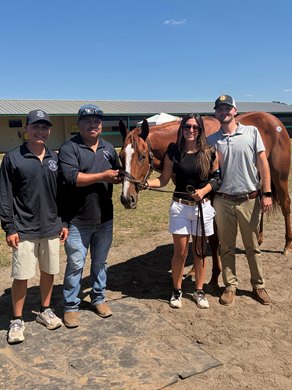
Some of my show friends were in Kentucky when the (2025) Keeneland September Sale was going on and we were talking about pinhooking at dinner. They said, "Wow, this sounds like a really fun adventure that we could all do together." So we all put money together and got some syndicates in order, and we were able to buy what we bought to the 2-year-old sales this year. I had originally thought I would consign them with Ciaran as I did the year before, but the number grew.
Both Nelson Arroyo of Arroyo Bloodstock and Greg Martin of Britton Peak had horses at Oak Ridge Training Center that I was getting on, and they were very encouraging of me starting my own consignment. As was Julie Rini, who gives me her homebreds to sell.
This year I received much assistance from Damon and Bailey Ming. Damon has worked as my outrider and Bailey is my veterinarian. I've known Bailey since I became involved with horses as her grandmother was my first-ever horse trainer.
BH: Do you believe getting on the horses you consign is an advantage for you?
BR: I think, yes and no. I can definitely feel stuff that you can't see on the ground, and vice versa. You can see stuff on the ground that maybe gets overlooked when you're riding.
I enjoy getting on them, because I can (find out) what the horses like or dislike, if they're going to be longer-distance or shorter-distance horses. It's a great tool to have, but I'm not sure if it's an advantage or not.
BH: What did it feel like to have your first consignment in your name this year?
BR: Oh, it was very nerve-wracking going off on my own, especially when I didn't initially plan to go off on my own this year. If you don't bring a good group your first year, I feel like it could be a little discouraging. I was very nervous of what everyone was going to think about how I got my horses ready, especially (me) being so young.
I really liked everything that we picked (as yearlings) and was very happy with the horses all year and their training. I was excited to bring them to the sale, but there's always that hesitation of how it is going to go. You want to make the clients and the partners happy as well.
At the April sale no one really knew who I was because they were coming up to the consignment and asking, "Whose consignment is this?" I think everyone just kind of was like, "Where did these horses come from?"
After I spoke to people, everyone was very encouraging and very supportive. There's definitely a need for young people to be coming up in the racehorse industry. I think it's great everyone's being supportive of young people.