

The August session of the 2026 Thoroughbred OwnerView Conference Series moderated by Gary Falter, OwnerView project manager, highlighted the importance of aftercare for horses once they are retired and the best ways to go about it.
The panelists included Stacie Clark Rogers, operations consultant for the Thoroughbred Aftercare Alliance; Jeff Lowe, director of communications at West Point Thoroughbreds; Dean Reeves, owner of Reeves Thoroughbred Racing; Billy Koch, founder and managing partner of Little Red Feather Racing; and Graham Motion, trainer.
Falter introduced the topic with a key question concerning how much progress the industry has made over the years in terms of aftercare.
Motion said, "I think we've come a long way. I think we've got plenty of ground still to cover. I think ... the biggest issues we still have are funds and land to put retired horses. Horses race till they're 5 and 6, and they live till they're 30. And I think every owner, when they come in the game, needs to realize they have a responsibility."
Lowe chimed in speaking about the differences of the aftercare of horses from years ago and now.
"The biggest thing that's changed ... is that there is a lot more awareness of what you can do. Not that long ago, I would say 10 years ago, before I was with West Point, I was in the discussion about a horse that needed to retire and we could not find a place for him. And (the horse) ultimately had to (be) put down, there was no other option. Today, I don't think that decision would have had to have been made."
Reeves took the issue a step further by discussing how to take aftercare to the next level.
"Rather than us scouring around the internet in different places or finding out who wants a horse, who needs a horse, (we must think): Where can we put them? Is there somebody in Ocala that'll take them? Maybe we start to centralize that.
"And two things, (aftercare) really needs the funding. So, either you pay when you get ready to retire them or when you buy a horse. If people are paying millions of dollars for these horses, (it) seems to me that you can throw a little money toward the retirement. So, I'd like to see that. on the front end and on the back end."
Koch added: "We need to make it easy for people to be able to retire these racehorses."
When it comes to retiring horses, Motion said responsibility from everyone involved is extremely important.
"I think one of the most disappointing things is when some of these horses show up in the retirement facilities in bad condition, because I do feel as trainers we have a responsibility. Retirement facilities are not supposed to be sort of dumping grounds. They're supposed to be places that a horse can live out his life in the best possible condition.
"It doesn't always have to be an injury. It can just be for a horse that's been very disappointing and you just don't think it's going to be competitive at any claiming level. We've done that with several horses that have gone on to have really good careers doing other things."
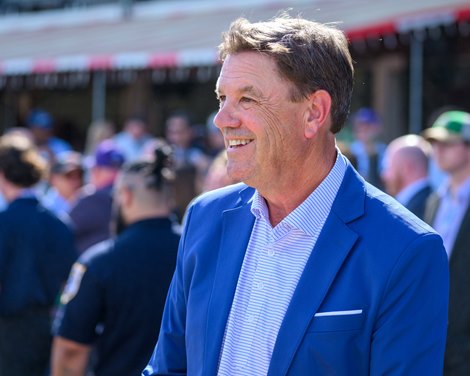
If allowed to make one change in the aftercare of horses. Koch stressed that funding is the key piece of the puzzle.
"I think funding of the aftercare would be mine. I know for a fact that sales companies, racetracks, they're all starting to contribute. They didn't always do it, but I think it should be mandatory. I think the stallions, the farms in Kentucky, these big, massive farms, there's money out there that we're not getting. And we just need to continue harping on just how important this is, get our message out there, and find new ways to fund these programs. I think that's the most important thing."
Finally, Rogers brought up all the different possibilities retired horses have once their racing career comes to an end.
"As an owner, you want to know what your options are, and you want to know what is out there. So, there are more options than I think most owners would know, or even trainers. They don't all have to be jumping horses. They can do equine-assisted services. They can be part of the great inmate programs across the country. But getting that communication from what you can do and what you want to do is important."